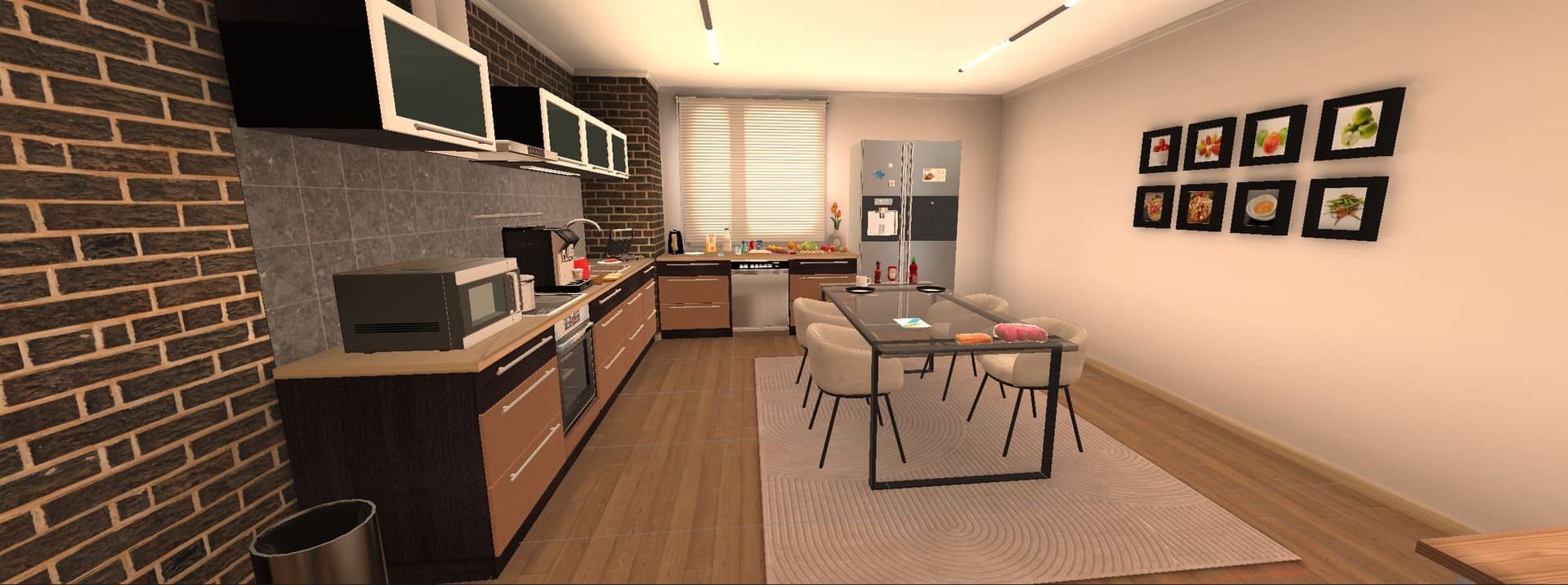
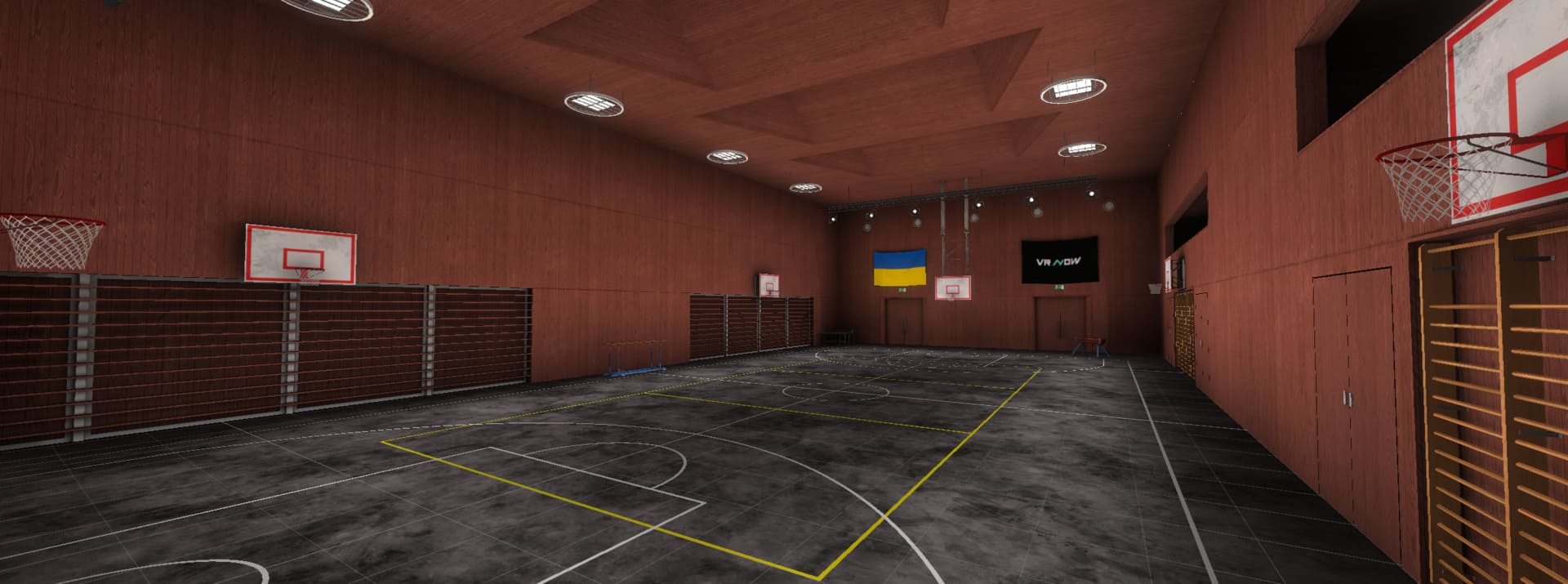
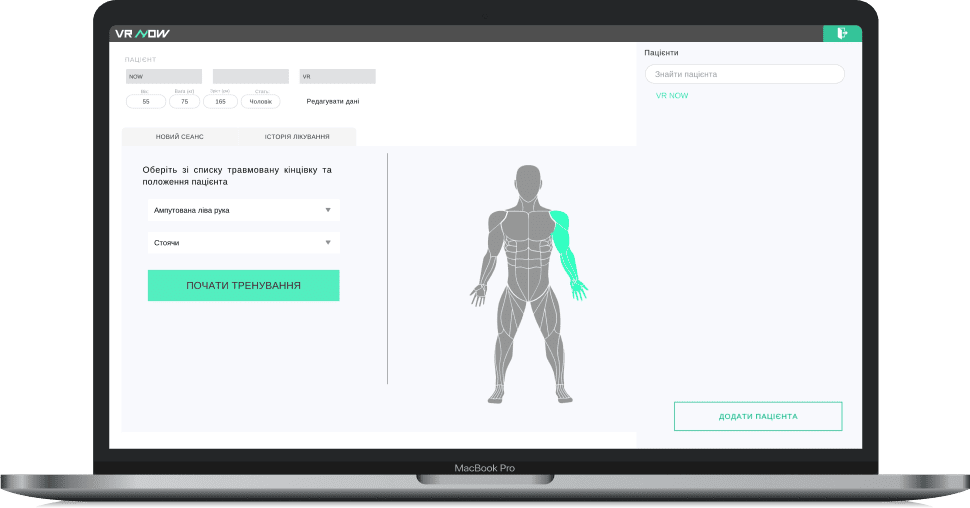
The system accurately analyzes movements, creates a virtual body of the patient, and provides clinically relevant feedback to the doctor, using modern sensors, signals, and a three-dimensional simulator as an effective tool for motor skills training

Accurate body representation
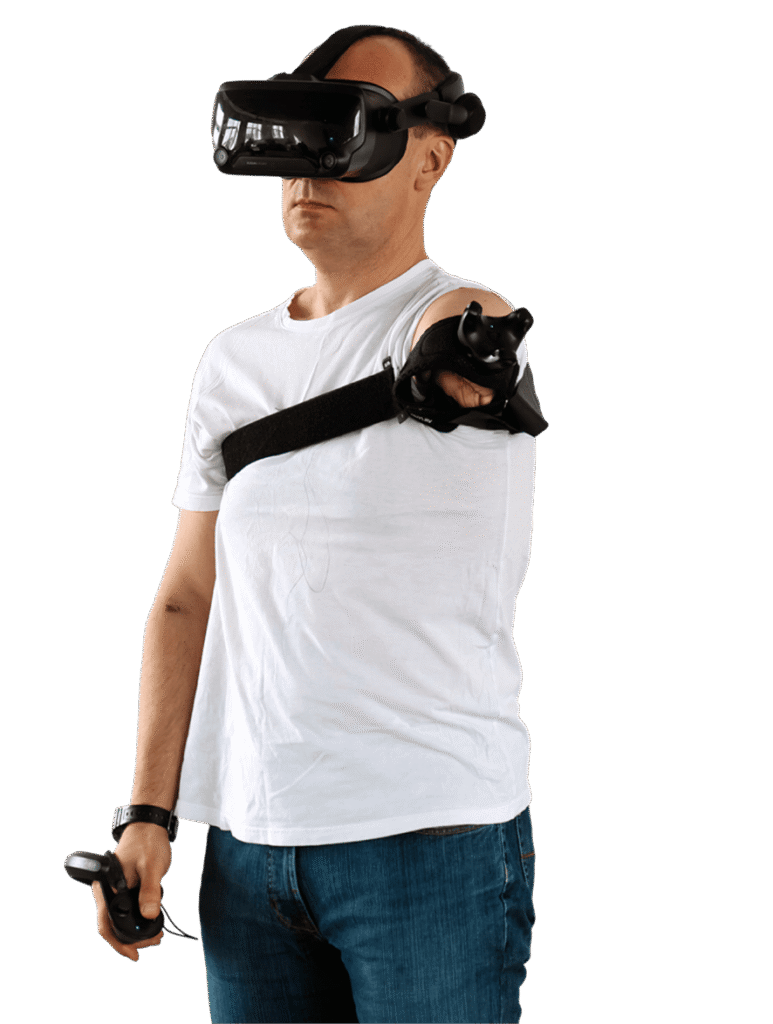
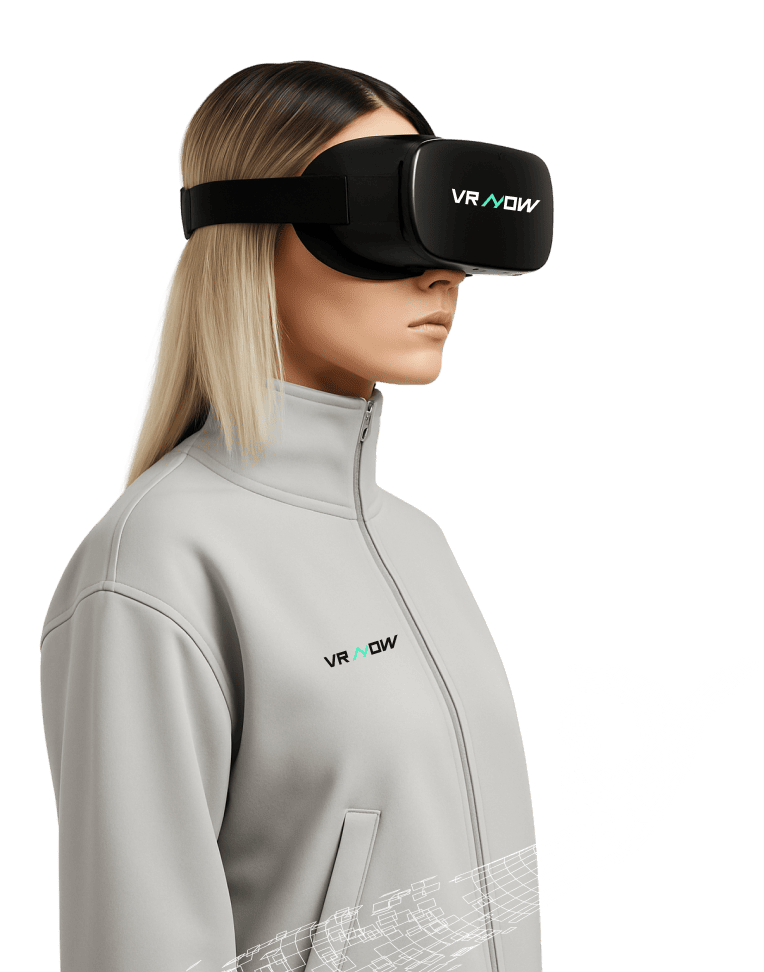
Seven trackers capture the patient’s movements and transmit them into VR in real time. The patient sees themselves at a 1:1 scale, which is characteristic of equipment for a VR room and next-generation VR hardware

Adaptation to functional status
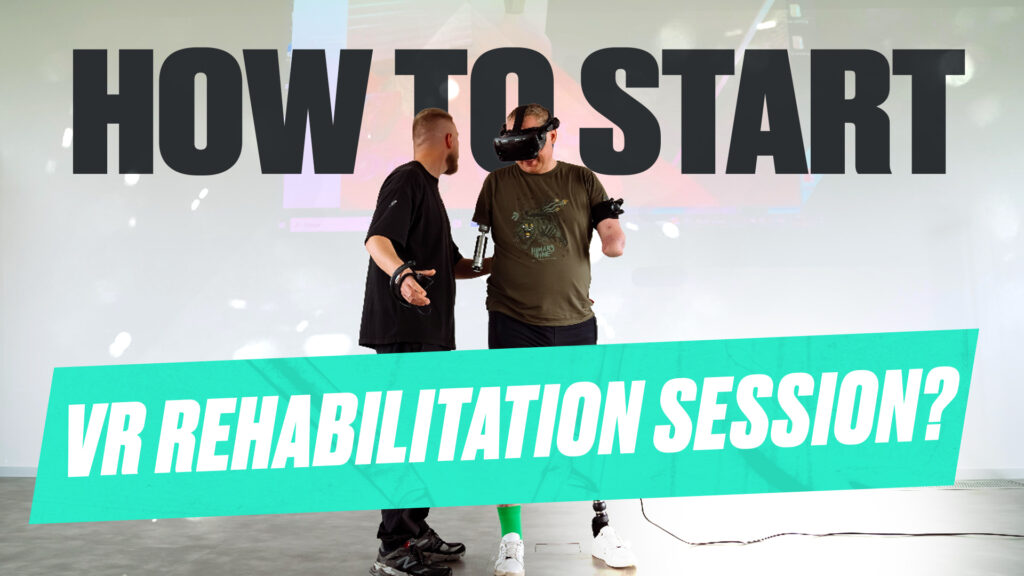
Suitable for seated, standing positions, and with a suspension system — across different stages of recovery, as a universal solution for using rehabilitation equipment and equipment for people with disabilities

Synchronized exercise performance
Movements of the virtual body accurately replicate real ones without delay, and the system controls trajectory and amplitude, ensuring an effectively structured rehabilitation method and modern training process

Objective movement analytics
Amplitude, speed, accuracy, and repetition count are recorded — for analyzing recovery dynamics and adjusting workload, making the system an important medical tool for reducing pain symptoms and improving outcomes